|
 |
|
Match Cut?....well, no |
Shot 1 |
Shot 2 |
| Griffith was magus of "classical cutting," the master shot>detail shot>detail shot cutting protocol. In a classically cut scene, detail shots reveal aspects of the action in a rhythm and order intended to inspire emotion. |
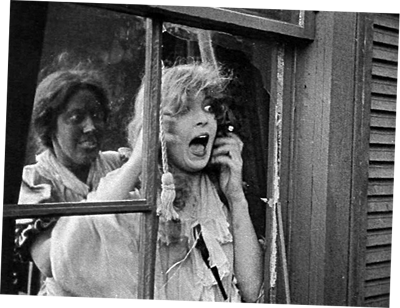
| But match-cutting—joining shots depicting an action from different vantage points at the frame in each where the action is identically advanced—often eluded Griffith. In the frames above, Elsie Stoneman, the first object of the horsemen's race to rescue, pleads for help from spies outside her window. Shot 1 and Shot 2 show the action from outside and inside the window. |
| Shot 2 continues the tussle of Shot 1. But the shots match imperfectly. In Shot 2, she continues pressing her shoulders towards the window as she had throughout the take. In Shot 1, she had already begun to confront her restrainer. The cut matches poorly. |
| The arrow points to the splice, visible here as it often was when negative cutters of Griffith's era assembled 35 mm
movies into single strand sequences for printing. |
| Shot 3 (below) would have better matched Shot 2. It appears on screen 36 frames (about 2 seconds) earlier. But Griffith chose otherwise. |
|
Shot 3 |